
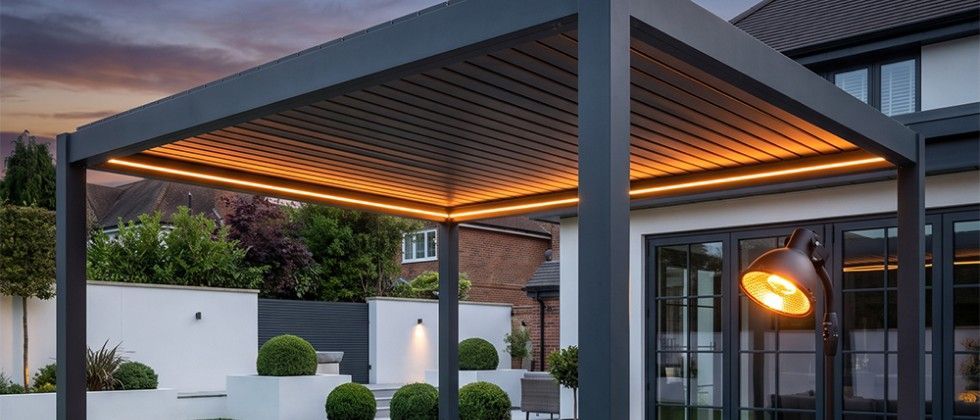
How Pergolas Are Shaping Modern Outdoor Living
Outdoor spaces are increasingly being planned as an extension of the home, with dedicated areas for dining, relaxing and spending time with friends and family.
Rather than treating furniture, shelter and layout as separate decisions, bringing them together from the start can create a patio that feels comfortable, purposeful and easier to use throughout the year.
Modern pergolas can play an important part in that approach. They add structure and adaptable shelter to an open patio without completely separating it from the garden, helping turn an exposed area into a more defined outdoor living space.
Create an Outdoor Room Without Closing In the Garden
One of the main benefits of a pergola is the sense of enclosure it can create without the need for solid walls.
An open patio can sometimes feel like an undefined space between the house and garden. Positioning a pergola over an outdoor dining set or lounge arrangement gives that area clearer boundaries and creates a natural focal point.
The garden still remains part of the experience. Open sides preserve views and airflow, while the overhead structure makes the furniture beneath feel more established and gives the space a clearer purpose.
This balance works particularly well in contemporary gardens, where introducing structure doesn’t have to mean losing the openness that makes outdoor living appealing.
Make the Patio More Usable Throughout the Day
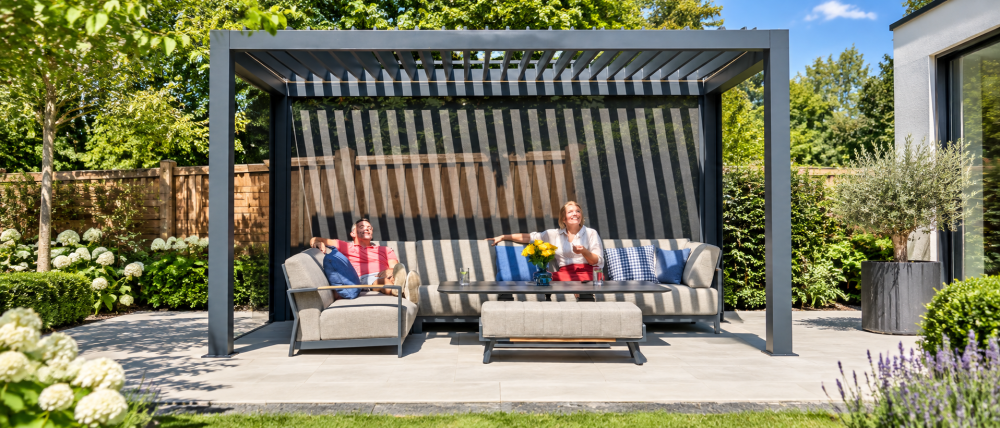
A patio that feels comfortable in the morning can become much less inviting as direct sunlight moves across the garden. Weather conditions can change how the space feels just as quickly.
Modern louvred pergolas give you more control over those conditions. Adjustable roof slats can remain open when you want more sunlight and airflow, angle to provide additional shade or close when greater overhead shelter is needed.
That flexibility means the patio doesn’t have to be planned around one particular time of day. The same area can provide a bright place for a morning coffee, more shade for an afternoon spent relaxing and a sheltered setting for entertaining later in the day.
It also makes the space easier to adapt around what you’re doing rather than having to change your plans around the conditions.
Create a Space for Dining, Relaxing or Entertaining
A pergola can give a particular part of the garden a clear purpose, and the furniture underneath it will largely determine how that space feels and functions.
Positioned over an outdoor dining table, the structure can establish a dedicated area for meals and entertaining. Paired with outdoor sofas or modular seating, it can create a more relaxed setting for reading, talking or spending a longer afternoon outside.
In a larger garden, the pergola can anchor the main furniture arrangement while the surrounding patio remains open. This gives the outdoor living area a sense of place without separating it completely from the rest of the garden.
Planning the pergola and furniture together generally produces a better result than treating the structure as something to add once the patio has already been furnished. It allows dimensions, orientation and circulation to be considered as one complete layout.
Use a Pergola to Define Different Garden Zones
Larger gardens often benefit from having distinct areas for different activities rather than allowing the patio, lawn, planting and furniture to merge into one open space.
A pergola can create that distinction without introducing walls or hard divisions. It gives the eye a clear destination and helps establish where one part of the garden begins and another ends.
Close to the house, this could be an outdoor dining area with easy access to the kitchen. Elsewhere, it might create a lounge overlooking the garden or a separate entertaining area positioned away from the main house.
The same principle can work surprisingly well in smaller gardens. Giving one part of a compact patio a clearly defined purpose can make the available space feel more organised, rather than trying to accommodate several loosely arranged furniture areas.
Plan the Pergola and Outdoor Furniture Together
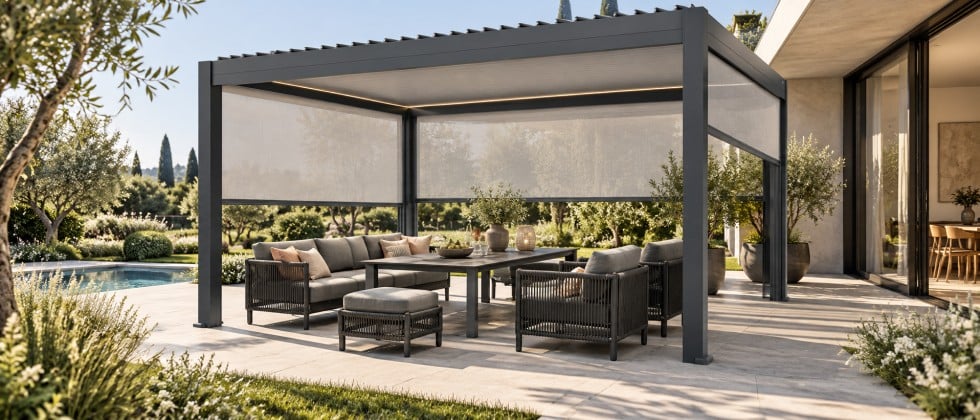
A pergola needs to accommodate more than the basic dimensions of the furniture underneath it. The way people move around and use that furniture matters just as much.
For an outdoor dining area, allow for the additional space occupied when chairs are pulled back from the table. A lounge arrangement needs enough room around sofas, modular seating, footstools and coffee tables to feel comfortable rather than tightly fitted beneath the structure.
Think about orientation at the same time. A sofa might be positioned towards the best view across the garden, while a dining table close to the house could follow the natural route from the kitchen to the patio.
The furniture and pergola can also work together visually. Clean, lined contemporary outdoor furniture sits naturally alongside the architectural appearance of an aluminium pergola, helping the whole area feel intentionally planned rather than assembled piece by piece.
Find the Right Balance Between Openness and Shelter
Creating a comfortable outdoor living area doesn’t mean enclosing every side of the pergola.
Leaving the structure open maintains airflow, preserves views and keeps a stronger connection with the garden. For many patios, that openness will be part of what makes the space enjoyable. Where more protection is useful, blinds or screens can be introduced selectively rather than enclosing the entire structure. This can help with low sunlight, exposed sides or areas overlooked by neighbouring properties.
Adjustable blinds provide flexibility when conditions change, while slatted screens can create a more permanent visual boundary where additional privacy is wanted.
The key is to consider where protection will make a meaningful difference. Keeping other sides open can provide shelter and privacy where they’re needed without making the outdoor living area feel unnecessarily enclosed.
Connect the House, Pergola and Garden
Where you position a pergola can change how the entire outdoor area relates to the house.
Placed close to doors opening onto a patio or terrace, it can create a natural transition between indoor and outdoor living. This can work particularly well for dining and entertaining, where food, drinks and people are regularly moving between the kitchen and garden.
A pergola positioned further away creates a different experience. Rather than extending the house, it becomes a destination within the garden - somewhere to sit, dine or relax away from the main building.
Think about sightlines from both directions as well. Consider what you’ll see when sitting beneath the pergola, but also how the structure and furniture will look when viewed from inside the house or elsewhere in the garden.
The pergola finish, furniture and surrounding patio materials can then be chosen with that wider view in mind, creating a stronger visual relationship between the different parts of the space.
Consider How the Space Will Feel Once You’re Sitting Down
Dimensions are important, but a successful outdoor living space needs to work from the perspective of the people actually using it.
Before settling on the layout, think about where each seat faces. A sofa might look perfectly positioned on a plan but feel less successful if it turns away from the garden or leaves people looking directly towards a boundary.
The same applies to dining. Consider where guests will sit, how people will move around the table and whether the position makes serving food from the house straightforward.
Small changes to orientation can make a noticeable difference. Turning a seating arrangement towards planting, opening up one side of the pergola or moving a dining table slightly away from the edge can make the whole area feel more natural to use.
Think About How You’ll Use the Pergola in the Evening
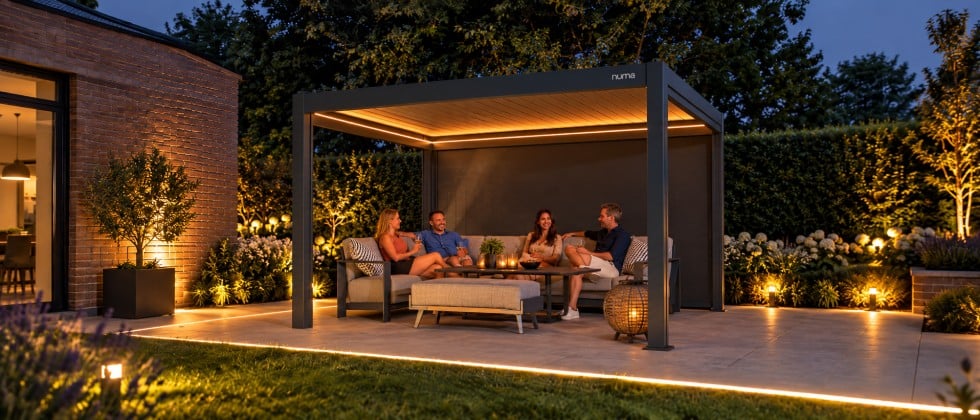
An outdoor living area often changes character once the sun goes down. A space used for relaxing during the afternoon might become somewhere for dinner, drinks or entertaining in the evening.
Lighting should support those activities without overwhelming the setting. Softer illumination around a lounge arrangement can create a more relaxed atmosphere, while a dining area needs enough practical light for eating and serving food comfortably.
Furniture choice matters here too. Deep outdoor sofas create a setting suited to longer, more relaxed evenings, while a dining set gives the area a clearer focus for meals and larger gatherings.
Planning for both daytime and evening use can help you get more from the space rather than designing it around one particular part of the day.
Design the Outdoor Space Around How You Live
The most useful outdoor spaces aren’t necessarily the ones with the most furniture or features. They’re the ones planned around what people genuinely want to do there.
For one home, that might mean an outdoor dining area close to the kitchen for regular family meals. For another, a comfortable modular sofa beneath a pergola might be more valuable because the garden is mainly used for relaxing and entertaining.
Larger patios may comfortably support both. In that case, think about which activity should sit beneath the pergola and how the surrounding furniture can support it without making the area feel crowded.
A modern pergola provides the structure, but it’s the combination of shelter, furniture, orientation and usable space that determines how successful the finished area feels.
Planned together, those elements can turn an open patio into a comfortable part of everyday life, somewhere that feels connected to the home while still retaining the openness and character of the garden.