
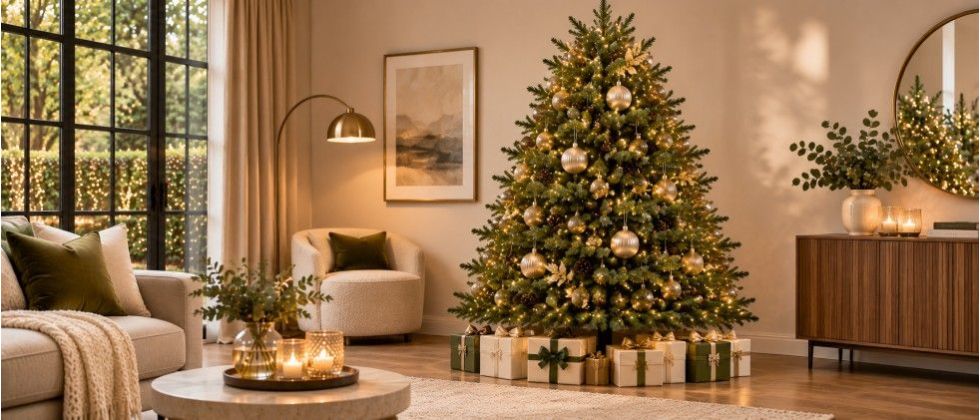
How to Choose a Realistic Artificial Christmas Tree
A realistic artificial Christmas tree should look convincing before you add a single decoration. Natural-looking foliage, well-spaced branches and a balanced shape make all the difference, especially when the tree is the main feature of your living room.
Product descriptions often mention PE foliage, PVC tips and branch counts, but those figures only tell part of the story. Knowing what they mean — and what to look for in photographs and measurements — makes it easier to choose a tree you'll enjoy bringing out each Christmas.
What Makes an Artificial Christmas Tree Look Realistic?
The most convincing trees have variation. Real branches don't all point in the same direction, and their needles aren't identical in colour, length or texture. An artificial tree looks more natural when its foliage has some of that detail, without leaving obvious gaps around the central pole.
Proportions matter just as much as the needles. A full tree needs enough depth through its branches to support its wider shape, while a slim tree should still look well filled-out from the angles you'll see every day.
PE vs PVC Foliage: What's the Difference?
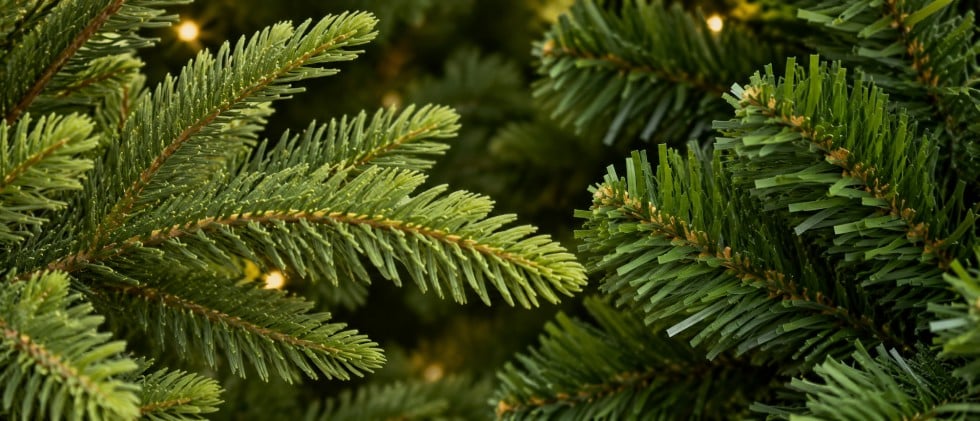
PE Foliage
PE stands for polyethylene. These branch tips are moulded into three-dimensional shapes, creating individual needles and more defined branch detail than traditional flat-cut foliage.
PE is particularly useful on the outer branches, where you see the tree up close. Look for clear photographs of the needle shape rather than relying on the phrase realistic foliage alone.
PVC Foliage
PVC foliage is generally made from thin strips cut to resemble needles. It has a different texture from moulded PE, but it can add useful fullness around the centre of the tree.
Some artificial trees combine the two materials, using PE where the branches are most visible and PVC further inside. That can create a natural-looking outer shape with enough density to keep the central structure from showing through.
Is a Higher PE Percentage Always Better?
Not on its own. A tree with detailed PE tips can still look sparse if the branches are poorly arranged, while a well-designed mix of PE and PVC may look fuller overall.
Compare close-up photographs alongside full-tree images, and check whether the product gives a breakdown of the materials. It's the finished appearance that matters, rather than a single percentage.
Does Branch Tip Count Matter?
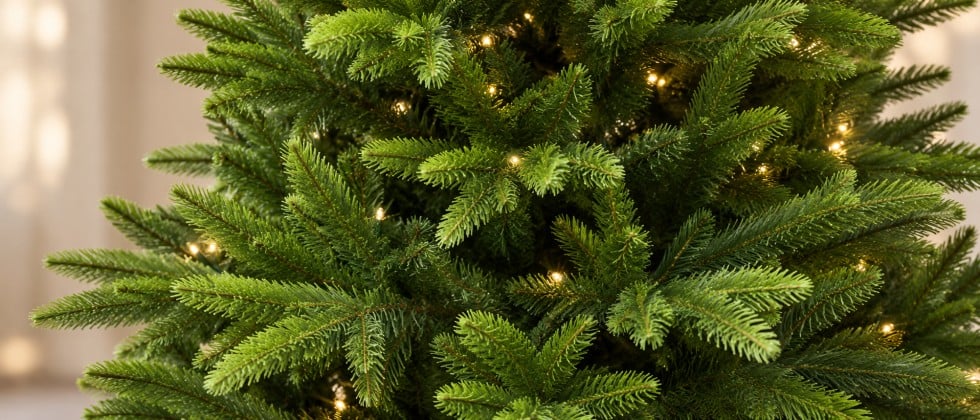
Branch tip count tells you how many foliage tips a tree has, but a higher number doesn't automatically make it more realistic. A wide 7.5ft tree needs more foliage than a slim tree of the same height simply because it has more space to fill.
When comparing two trees, check the tip count alongside the height, maximum diameter and branch layout. Look at the middle and lower sections in product photographs, where gaps are often more noticeable than at the top.
A good tree should look full without being so tightly packed that there's nowhere to hang decorations. Some space between the branches makes it easier to place baubles at different depths and creates a more natural outline.
Choose a Shape That Suits the Room
A full Christmas tree has the broad silhouette many people associate with a traditional fir. It works especially well in a generous living room, where the lower branches have space to spread out without brushing against furniture.
A slim tree makes more sense in a narrower room or beside a busy walkway. It can still look realistic; the shape is simply more upright, with less floor space taken up by the branches.
Height changes the effect too. A 6ft Christmas tree can sit comfortably in many living rooms, while a 7ft Christmas tree may feel better proportioned alongside taller furniture or in a more open space.
For rooms with generous ceiling height, 7.5ft Christmas trees and 8ft Christmas trees create a taller display. Check the widest diameter and allow space for a topper before choosing; a large tree that has to be pushed into a corner rarely looks its best.
Look at Colour and Foliage Finish
Natural trees have subtle variations in green, often with darker areas towards the centre and lighter or differently textured tips. That variation gives artificial foliage more depth than a completely uniform colour.
A traditional green tree is the closest match if you want the appearance of a natural fir. Frosted and snowy finishes create a different effect, suggesting branches dusted with frost or snow, while an all-white tree is a more decorative choice.
With any finish, inspect how it looks across the whole tree. Close-up detail is useful, but you also want the colour and texture to feel consistent when you step back.
Why Branch Construction and Shaping Matter
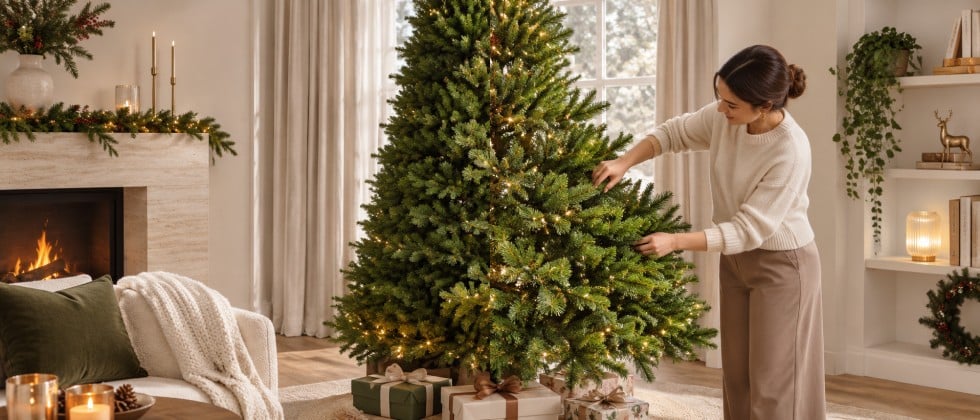
Hinged branches are attached to the central structure and fold down as the tree is assembled. They can make set-up more straightforward, but the branches still need arranging before the tree reaches its intended shape.
Start at the bottom and work upwards, opening each branch and spreading its tips in different directions. Angle some slightly upwards and others sideways or forwards, rather than pointing every tip straight out.
Step back regularly to look for empty patches, particularly near the centre. A tree can appear thin straight out of its box because the foliage has been compressed in storage; careful shaping often makes a greater difference than adding more decorations.
Does Pre-Lit or Unlit Affect Realism?
Lighting doesn't change the foliage itself, but it can bring out the depth of the branches. Pre-lit Christmas trees already have lights arranged through the tree, saving you the task of threading them through the foliage.
With unlit Christmas trees, you choose the colour and placement yourself. Positioning some lights deeper in the tree, rather than only along the outer tips, can give the display a softer, more layered appearance.
Neither option is inherently more realistic. The quality of the foliage and the way you shape the branches will have more influence on how the tree looks during the day.
What Should You Check Before Buying?
When comparing artificial Christmas trees online, use the product photographs and specifications together. Pay particular attention to:
- Foliage materials: Whether the tree uses PE, PVC or a combination, and where the different tips are positioned.
- Height and maximum diameter: Both determine how the tree will sit alongside your furniture.
- Branch tip count: Useful when considered with the tree's size and shape, rather than on its own.
- Close-up and full-tree photographs: Look for needle detail, branch depth and a balanced silhouette.
- Branch construction: Check how the tree is assembled and whether the branches can be shaped.
- Lighting and warranty details: Especially relevant if you're considering a pre-lit design you'll use each year.
If you're comparing an 8ft tree with a 9ft tree, don't judge by height alone. The larger tree also needs enough foliage across its middle and lower branches to maintain a convincing shape.
How to Make Your Tree Look More Natural
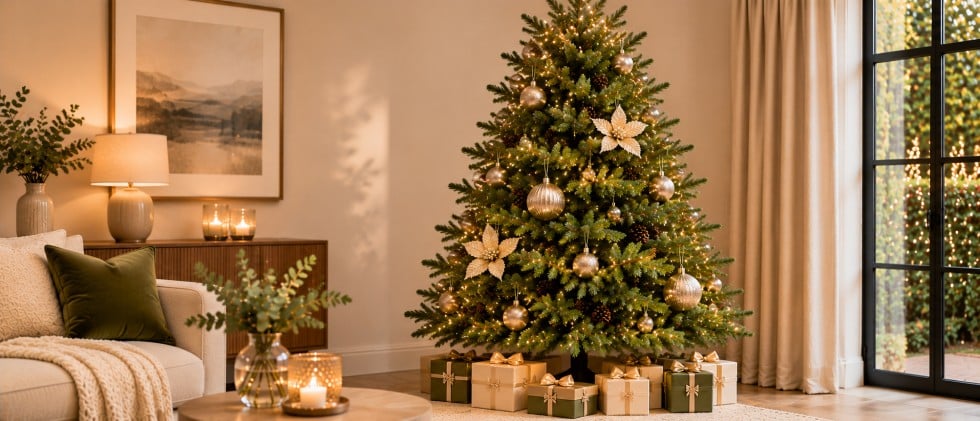
Before decorating, take time to shape the tree from several viewing angles. If it stands against a wall, concentrate on the front and sides you'll see most often, while keeping the overall shape balanced.
Hang a few ornaments deeper inside the branches, then add others towards the tips. Mixing sizes and leaving some foliage visible creates more depth than covering every available branch.
The base matters as well. A neatly fitted tree skirt or suitable basket can conceal the stand and give the display a more finished look without drawing attention away from the tree.
Find a Realistic Artificial Christmas Tree for Your Home
Start with the size and shape your room can comfortably accommodate, then compare foliage detail, branch density and construction. A tree that looks balanced before it's decorated gives you a better starting point every year.
Explore NUMA's collection of artificial Christmas trees to compare different heights, foliage finishes and pre-lit or unlit designs.